



















UAE– Latest IELTS Writing Task 1 & 2 – June 2025 (Academic)
July 5, 2025UK – Latest IELTS Writing Task 1 & 2 – June 2025 (Academic)
July 8, 2025WRITING TASK 1
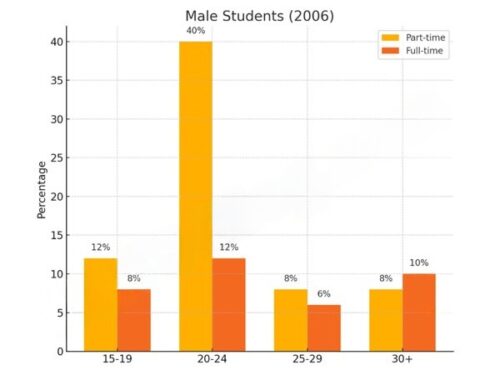
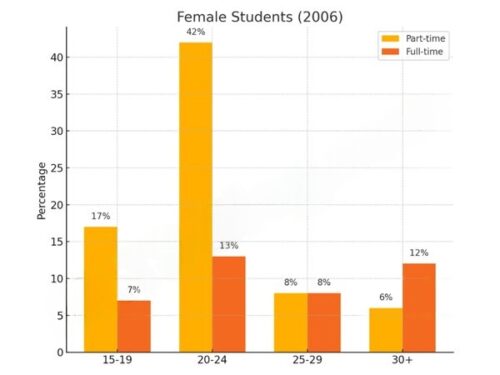
The two bar charts below show the percentage of male and female students enrolled in full-time and part-time university education in a certain country in 2006.
Summarise the information by selecting and reporting the main features, and make comparisons where relevant
Write at least 150 words (You should spend 20 minutes on this task).
Sample Answer
The two bar charts show the percentage of male and female students who were studying full-time and part-time at university in 2006. The data is divided into different age groups. From the charts, it is clear that most students were in the 20–24 age group. In this group, part-time study was the most popular. 42% of females and 40% of males were studying part-time. For full-time study in the same group, 13% of females and 12% of males were enrolled. In the 15–19 age group, more girls (17%) studied part-time than boys (12%), but full-time study was almost the same for both (7% for girls and 8% for boys). In the 25–29 age group, both males and females had 8% in part-time, but more females studied full-time than males (8% vs 6%). In the 30+ group, 12% of women studied full-time, which was higher than 10% of men. But more men (8%) studied part-time than women (6%). To sum up, part-time study was more popular, especially among women. Full-time study was quite balanced between males and females in most age groups.
WRITING TASK 2
In many organisations, leadership roles are often held by older people. Some believe that younger people should be given more opportunities to become leaders.
To what extent do you agree or disagree?
Give reasons for your answer and include relevant examples from your knowledge or experience.
Sample Answer
In many companies, leadership jobs are mostly given to older employees because of their long experience. However, I think young people should also be trusted with leadership roles, as they bring fresh thoughts and a different point of view.
Young leaders often have good knowledge of technology and modern ways of working. For instance, some big companies like Facebook were created by young people. They usually understand what today’s market needs and can bring energy and creativity to the workplace. Their digital skills also help companies move faster in a changing world.
I believe that leadership depends on a person’s ability, not just on how old they are. Many young individuals are skilled, confident, and ready to manage teams. Without giving them a chance, we may miss out on great talent.
Of course, senior employees are very valuable due to their experience and wisdom. They can guide and support the younger ones. But organisations should not depend only on age while choosing leaders. Having both older and younger people in leadership can make the team more effective.
In conclusion, I agree that young people should be given more chances to become leaders. It is important to focus on skills and ideas, not just age or years of work.
